Engagement
Teaching
12.013 Planetary Explorations
Spring 2026
A tour of the solar system, from the scorched surface of Mercury to the icy nuclei of the outermost comets. Students explore the geology, interiors, atmosphere, and long-term evolution of planets, moons, and small bodies across the solar system. Students work directly with cutting-edge planetary datasets and techniques, including spacecraft imagery, spectra, topographic data, crater counts, meteorite samples, and atmospheric experiments. Culminates in an individual hypothesis-driven mission proposal in which students design a scientific exploration strategy for a solar system target of their choosing.
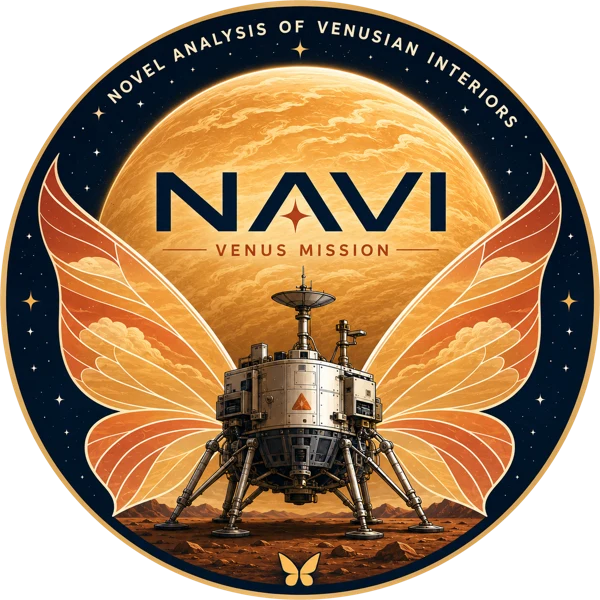
Class logo and logos from student mission proposals: ARGUS (Uranus), PRISM (lunar polar sample return) and NAVI (Venus interior).
12.002 Introduction to Geophysics and Planetary Science
Spring 2023, 2024, 2025
Study of the structure, composition, and physical processes governing the terrestrial planets, including their formation and basic orbital properties. Topics include plate tectonics, earthquakes, seismic waves, rheology, impact cratering, gravity and magnetic fields, heat flux, thermal structure, mantle convection, deep interiors, planetary magnetism, and core dynamics. Suitable for majors and non-majors seeking general background in geophysics and planetary structure.
Sample of an online class on planetary moments of inertia for 12.002.
12.421 Physical Principles of Remote Sensing
Fall 2026
Introduction to the physics of remote sensing, with applications to the study of Earth, the Moon, and other planets and solar system bodies, as well as to emerging industrial applications. Covers the physical principles of optical, thermal, radar, and lidar remote sensing with an emphasis on the fundamental properties of electromagnetic waves; the principles of electromagnetic scattering from real and idealized materials, including various types of surfaces and vegetation; the interaction of electromagnetic radiation with the atmosphere; and thermal and microwave emission from various media. Discusses remote sensing platforms along with the essentials of orbital mechanics and data processing methods and tools.
12.S593 Exploring Solar System Surfaces (No Spacesuit Required)
Fall 2025
Investigates the diverse surfaces of planetary bodies throughout our solar system through the lens of robotic exploration and remote sensing. Examines how mission data reveals the formation, evolution, and current state of rocky planets, icy moons, and small bodies. Compares and contrasts geological processes across different planetary environments, from Mercury's extreme temperature variations to the subsurface oceans of Europa and Enceladus. Topics may include: impact cratering; volcanism; tectonics; weathering and erosion processes; sedimentary deposits; glacial and periglacial features; and the search for habitable environments. Emphasizes critical reading, student-led discussions, and comparative planetology approaches.
Outreach
Building Mars in Lego
A community-built Lego model of the surface of Mars, made from real mission data. Elevation comes from the MOLA global topography and colours come from the USGS geologic map of Mars (Tanaka et al., 2014), each resampled to a 96 by 48 grid of 2x2 plates on 18 baseplates. Every plate of height stands for about 2 km of elevation, so the tallest Tharsis volcanoes stand 13 to 14 plates high. Members of the EAPS community build it plate by plate from printed guides.
The planned model, with relief doubled for this preview. Drag to turn it.
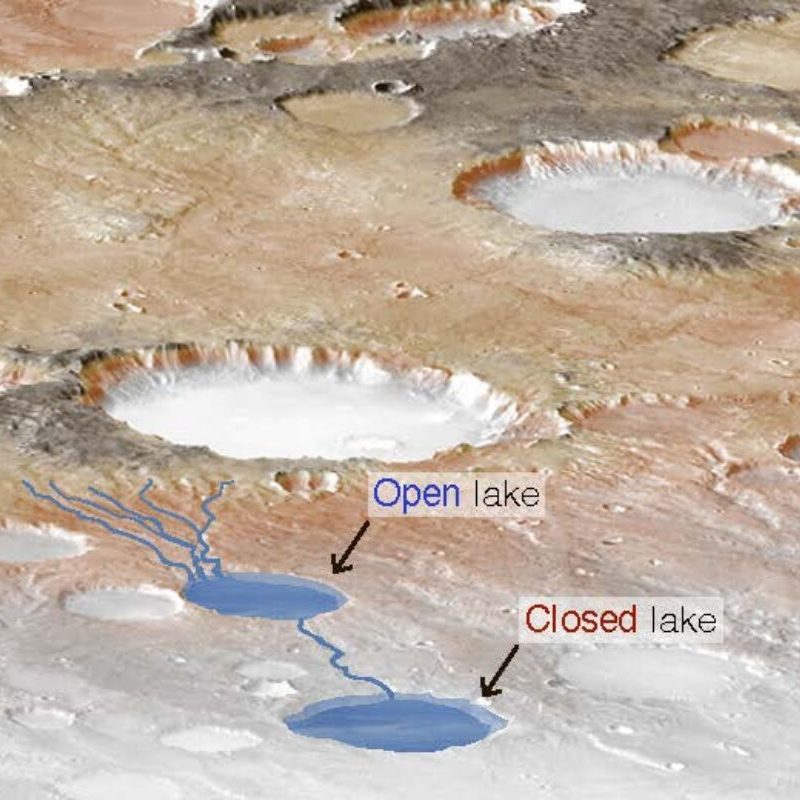
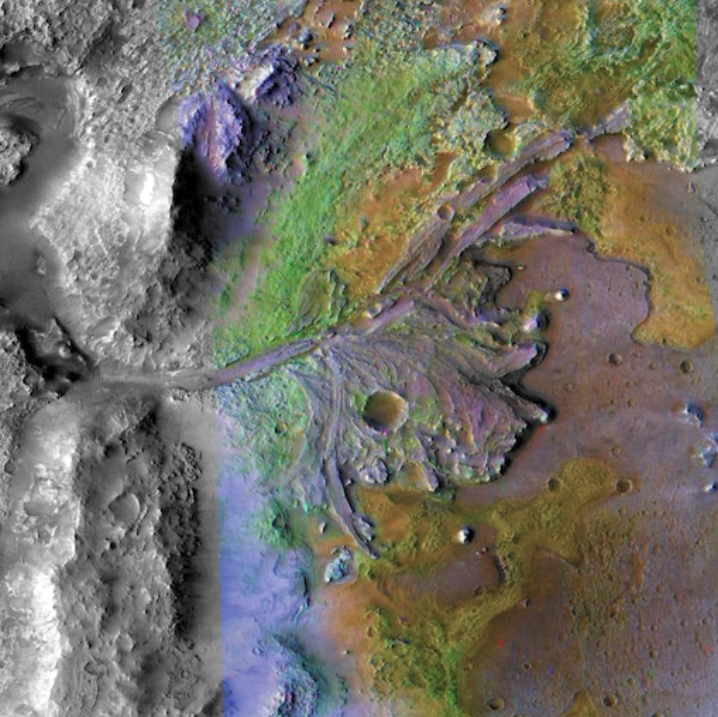
News video on our work published in Nature on lake outflows.
5 minute flash talk for an interview on my research.
MIT Alumni Forum talk on decoding the mystery of water on Mars, 2025.
In the media
Here you can find the latest, major news articles and other media about our research. Click the button to read more!
2022
2021
2020
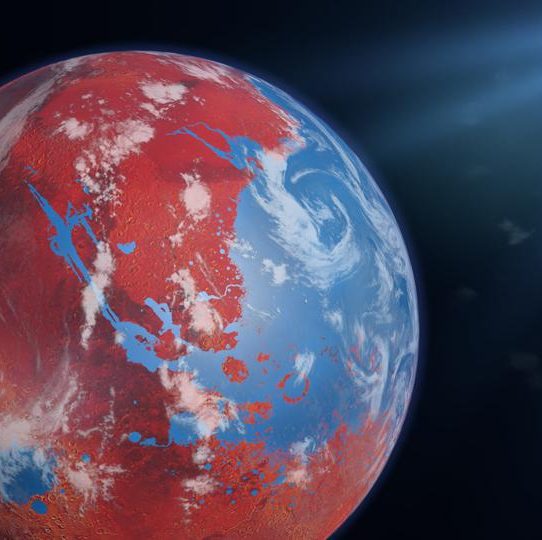
“A blue ‘Red Planet’? Rain and snow storms may have soaked the Martian surface, say scientists”
by Jamie Carter
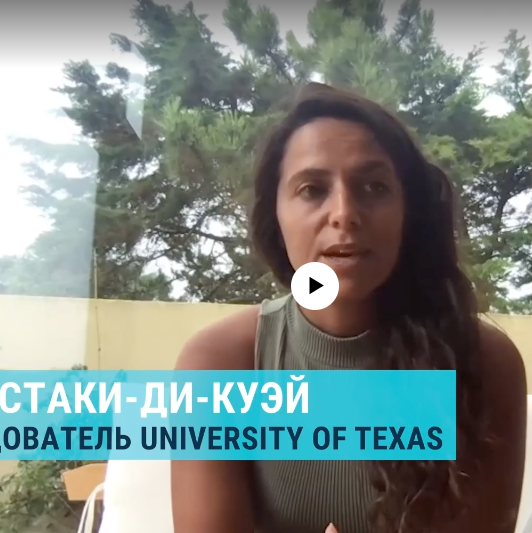
“"Rivers used to flow and it rained on Mars" (Translated from Russian)”
by Sergei Dogotar and Alexey Gorbachev